


Infinity Empires
IFun Games
Infinity Empires is a strategy game from IFun Games that caught my attention because its central promise is easy to understand: build enough strength to push back darkness and turn a fragile beginning into an empire. I found it most interesting when I treated it less like a quick battle game and more like a planning exercise. Every improvement affects what I can do next, so the enjoyable part is not simply winning a fight. It is deciding which kind of progress will make the next fight manageable.
The game is free to play and suitable for Everyone, which makes it approachable for a broad audience. It has also built a visible player base, with more than half a million installs and an average score of 4.5 from roughly 33 thousand ratings. Those figures do not replace personal experience, but they do suggest that the basic formula has found an audience. After spending time with it, I can see why: the familiar empire-building structure gives short sessions a clear purpose while leaving room for longer-term decisions.
Why the empire-building loop matters
The strongest capability here is the way expansion and military preparation are tied together. I am not simply collecting resources in one screen and then jumping into unrelated battles. The feeling is that each choice is part of a larger campaign: strengthen the foundation, prepare the forces, and then decide whether the next push is worth the risk. That connection gives ordinary upgrades more meaning.
In many mobile strategy games, the opening hours can feel like a checklist. Tap an upgrade, wait, claim a reward, and repeat. Infinity Empires is more engaging when I pause before spending and ask what problem I am trying to solve. If my progress is blocked by weak forces, improving the economy alone will not immediately help. If development is slow, adding power without improving the underlying base can leave me waiting just as much. The game works best when I think in terms of a chain rather than isolated buttons.
The important skill is sequencing progress, not merely collecting it. That is the practical effect of the empire concept. A player who plans the order of improvements can get more value from the same play session than someone who spends everything as soon as it becomes available. I found this especially useful when I had several possible upgrades competing for attention. The tempting choice was often the most visible one, but the sensible choice was the improvement that removed the next bottleneck.
Related News






This makes the game a good fit for people who enjoy strategy with a steady sense of development. It is not trying to be a pure board-game simulation, and it does not demand that every decision be perfectly calculated. Instead, it gives me enough connected choices to make progress feel earned. The atmosphere of fighting darkness adds a clear direction, while the empire-building layer gives that direction practical steps.
What the capability feels like during a normal session
My usual approach is to begin by checking what is already available rather than immediately starting the most dramatic action. I look at the current state of development, identify the next obstacle, and then decide whether my resources are better spent on preparation or expansion. This small habit prevents a common mistake: entering a confrontation simply because it is available, without considering whether the reward justifies the cost.
Once I have chosen a target, the decision has a useful consequence. A successful push can open the way to further growth, while a poorly timed one can make the next stretch feel slower. That gives battles a role beyond spectacle. They become tests of the preparation I have made. I enjoy that because it turns the question from “Can I win this encounter?” into “Is now the right time to attempt it?”
Gallery
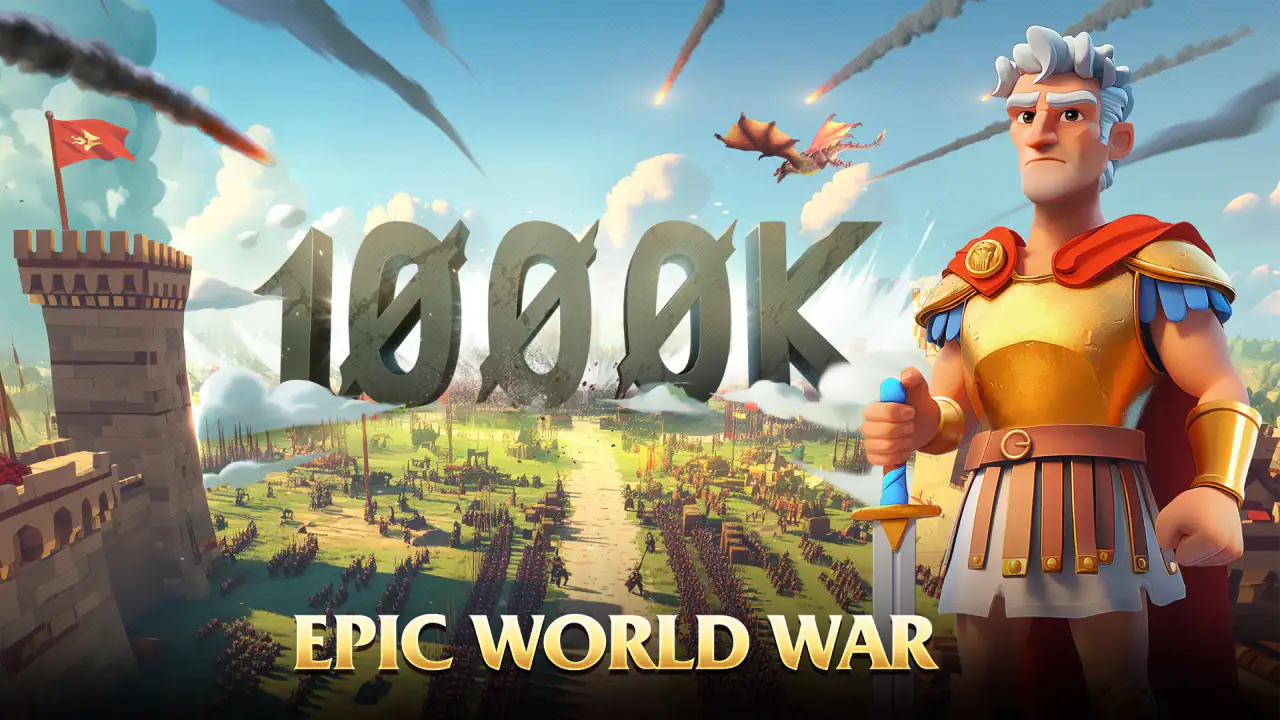
The game is also comfortable for short visits. I can make a few meaningful decisions, improve my position, and leave without feeling that I have abandoned an entire campaign. At the same time, a longer session lets me compare several routes and think more carefully about the next stage. That flexibility is one of its better qualities for mobile play.
New players should resist the urge to judge the whole experience by the first few minutes. The opening is designed to get the basic rhythm moving, but the more interesting choices appear when several priorities begin competing. That is when the difference between random spending and deliberate planning becomes noticeable. I recommend taking a moment to read what an upgrade changes before committing resources, especially when the game presents multiple ways to improve the empire.
A realistic everyday use case
Imagine having ten minutes during a commute or a break. I would open the game, review the current development situation, choose one improvement that supports my immediate goal, and then make a cautious attempt at the next available challenge. That is enough for a satisfying visit because the session has a beginning, a decision, and a visible result. I do not need to stay online for a long uninterrupted stretch to feel that I moved forward.
On a quieter evening, I would play differently. I would compare the cost of strengthening the empire with the likely value of pushing into the next confrontation. This is where the game becomes more thoughtful. A short session favors quick maintenance; a longer session gives me time to consider whether I am building for immediate survival or for a stronger position later.
That difference matters because Infinity Empires is not equally compelling at every pace. If I only want instant action with no preparation, the development layer may feel like an interruption. If I enjoy watching a plan take shape, the same layer becomes the reason to return. The game rewards patience more than reflexes, even when the presentation focuses attention on conflict.
How I would approach early progress
I would begin by choosing one clear objective for each visit. For example, I might focus on becoming strong enough for a particular push instead of trying to improve every part of the empire at once. This keeps spending under control and makes it easier to tell whether a decision actually helped.
A second useful habit is to keep a reserve. Spending every available resource can make progress look fast, but it removes flexibility when a more important requirement appears. I found that holding something back is not wasted potential; it is insurance against a sudden change in priorities. This is one of the less obvious lessons of the game, and it becomes more valuable as the number of choices grows.
I also recommend separating “nice to have” improvements from those that directly solve a current weakness. Cosmetic satisfaction is not the same as strategic value. When I focused on the upgrade that addressed my immediate limitation, the empire felt more coherent and my next decision became easier. That approach may sound simple, but it prevents the scattered progression that can make strategy games feel slower than they really are.
The tradeoffs behind the free-to-play model
The game can be downloaded and played without an upfront purchase, which lowers the barrier to trying it. That is useful for anyone who wants to test the empire-building loop before deciding whether it deserves regular attention. The free entry also makes it easier to recommend to a friend who already enjoys mobile strategy games but does not want to commit immediately.
There are in-app purchases ranging from $0.99 to $114.99 per item. That range is important because it changes how I evaluate the experience. A player who wants a completely even, no-spending environment may feel uncomfortable around optional purchases, while someone who treats the game as a casual hobby may be happy to ignore them. My advice is to decide on a personal spending limit before playing, rather than making that decision in the middle of a frustrating delay or difficult push.
The real tradeoff is not simply whether purchases exist. It is how much patience I am willing to bring. If I am prepared to let development happen at its own pace and make careful choices, the free structure is easier to live with. If I want to accelerate every stage, the game can become more expensive than expected because the purchase range reaches well beyond small impulse amounts.
This is also where the game differs from a traditional premium strategy title. A premium game usually asks for payment once and then lets the player focus on the systems without the same pressure to consider optional spending. Infinity Empires is more accessible at the start, but the ongoing model means I need stronger self-control. For players who value a single fixed purchase above convenience, a premium alternative may be a better match.
Where it stands beside other strategy games
Compared with a fast arcade strategy game, Infinity Empires asks for more patience. The satisfaction comes from preparing the next move and seeing the empire become more capable, not from constant rapid decisions. Compared with a deep desktop strategy game, it is easier to approach in short sessions and less intimidating when I only have a phone available.
Its middle position is both its strength and its limitation. I get a recognizable sense of building toward a larger goal without needing to study a huge rulebook. However, players searching for highly detailed diplomacy, complex simulation, or a fully self-contained campaign may find the experience less satisfying than a dedicated premium strategy title. I would choose this game for accessible progression and regular mobile sessions, not for the most elaborate strategic sandbox.
It also differs from a purely combat-focused game because preparation has a real effect on how I experience the action. Someone who enjoys seeing a base or empire gradually become more capable will probably appreciate that connection. Someone who wants every minute to contain direct tactical control may prefer a different category of game altogether.
Small decisions that improve the experience
One of my most useful discoveries was that I enjoy the game more when I stop treating every available action as mandatory. The interface may present several possible directions, but I do not need to pursue all of them at once. Choosing a single priority reduces mental clutter and makes the outcome of each session easier to understand.
Another practical tip is to use failed attempts as information rather than immediately reacting with spending. If a push does not work, I first ask whether the problem was insufficient preparation, poor timing, or an inefficient development choice. That pause protects the free-to-play experience and helps me learn the game’s rhythm. Buying progress may solve a short-term obstacle, but understanding the obstacle is more valuable over many sessions.
I also prefer to play in planned intervals instead of checking constantly. Short, purposeful visits keep the game from turning into background obligation. This is particularly helpful for players who like steady progress but dislike the feeling that a mobile game is demanding attention all day. The empire benefits from regular decisions, not necessarily endless screen time.
Who will enjoy it most
I think Infinity Empires is best for players who like watching a modest position grow into something stronger. It suits people who enjoy choosing priorities, saving for meaningful improvements, and deciding when preparation is sufficient for the next challenge. It is also a reasonable choice for someone new to mobile strategy because the main idea is easy to grasp even when the decisions become more involved.
The game is a particularly good fit if you want a strategy title that works in both brief and longer sessions. The Everyone rating makes it broadly approachable, although the free-to-play purchase structure is still something families should discuss before handing over a device. The current version is 3.0.3, and the minimum operating-system requirement is Android 7.0, so compatibility should be considered before downloading on an older device.
I would skip it if I dislike waiting for progress, dislike resource management, or want a game where every outcome depends on immediate reflexes. I would also look elsewhere if I am specifically seeking a premium experience with no optional purchases. The empire-building loop is the attraction, but it is also the source of the friction: the game asks me to accept gradual development and make peace with choosing between competing improvements.
My final recommendation
After playing it, I see Infinity Empires as a steady, accessible strategy game rather than a nonstop battle experience. Its best idea is the link between building an empire and deciding when that growing strength is ready to confront darkness. That relationship gives ordinary upgrades a purpose and makes timing more important than simply tapping through every available option.
IFun Games has created something approachable enough for casual play while still offering meaningful planning once the opening choices begin to branch. The free price makes it easy to try, and the established audience reflected by its 4.5 average shows that many players find the formula appealing. I would recommend it to a friend who enjoys gradual progress and wants a strategy game that can fit around everyday life.
My recommendation comes with one condition: play deliberately and set boundaries around optional spending. If you do that, Infinity Empires is most enjoyable as a patient campaign of decisions, not as a race to unlock everything immediately. For me, that balance is what makes it worth keeping installed. It does not replace a deep premium strategy game, but it offers a focused mobile alternative for anyone who likes turning small, sensible choices into a stronger empire.
FAQs for Infinity Empires
What is Infinity Empires?
Infinity Empires is a strategy game focused on building, expanding, and managing your own empire. You typically develop a stronghold, gather resources, research technologies, train troops, and compete with other players for territory and influence. The game combines city management with real-time or asynchronous strategy elements, making it suitable for players who enjoy planning, upgrading structures, forming alliances, and gradually increasing their power over time.
Is Infinity Empires free to download and play?
Infinity Empires can generally be downloaded and played without an upfront purchase, although the game may include optional in-app purchases. These purchases can provide resources, speed up construction, unlock useful items, or offer additional progression advantages. You can usually experience the main gameplay without spending money, but progress may feel slower at higher levels if you choose not to buy premium currency or limited-time bundles.
Does Infinity Empires require an internet connection?
Yes, Infinity Empires is designed primarily as an online strategy experience, so a stable internet connection is normally required. Your city, resources, alliances, events, and battles are connected to shared game servers. Because of this, offline play is usually limited or unavailable. A reliable Wi-Fi or mobile data connection is recommended, especially during competitive activities where connection interruptions could affect your actions or rewards.
Can I play Infinity Empires with other players?
Multiplayer interaction is an important part of Infinity Empires. Depending on the current version and available features, you may be able to join alliances, communicate with teammates, exchange assistance, participate in cooperative events, and compete against rival players. Working with an active alliance is often helpful because group coordination can improve defense, resource management, and performance during larger battles or server-wide competitions.
Is Infinity Empires suitable for casual players?
Infinity Empires can suit casual players who enjoy checking in regularly, improving a base, and making strategic decisions at their own pace. However, the game may require consistent attention as buildings, research, troop training, events, and alliance activities develop over time. Competitive players may spend more time optimizing progress, while casual users can still enjoy the management and progression systems without pursuing the highest rankings.
Pros
- Strong alliance features encourage teamwork and coordinated strategy.
- Base-building offers meaningful upgrades and long-term progression.
- The fantasy setting gives the game a distinctive visual identity.
- Regular events provide extra objectives beyond the main campaign.
- Multiple resource types add depth to planning and city management.
Cons
- Progress can feel slow without frequent play or resource spending.
- Alliance activity is important
- which may frustrate solo players.
- The interface can feel crowded on smaller phone screens.
- Large battles may drain battery and increase device heat.
- Competitive rankings can favor experienced or highly active players.


